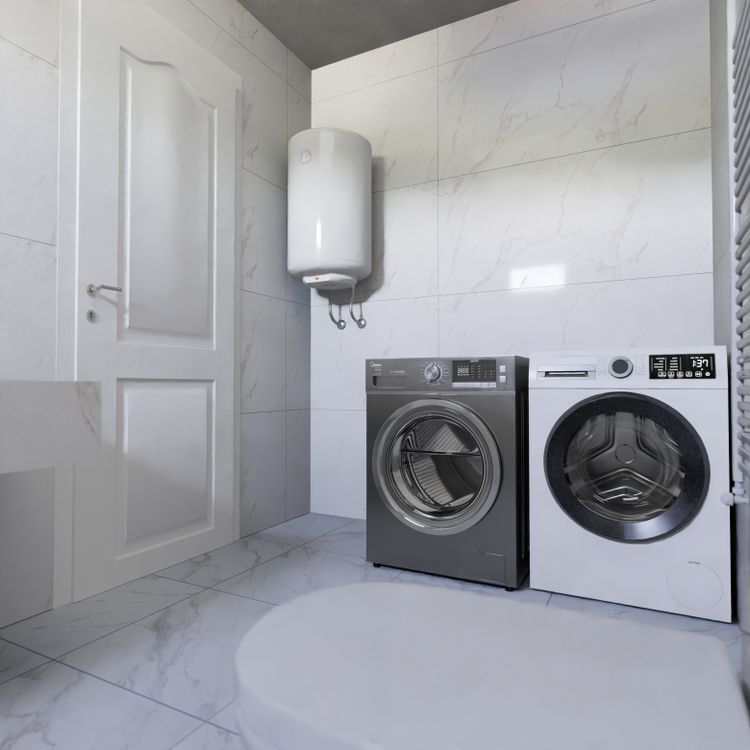
Tanks, valves and fittings
Water Heater Leak Cleanup in Greenbelt, MD
A water heater holds a tank full of water and is connected to the supply, so when it fails it can keep releasing water until someone closes the valve. We connect you with local crews who clean up after tank, valve and fitting failures in basements, closets and garages.
Water pooling around the heater? A person answers at any hour.
Water Heater Leaking? Call NowReviewed
- Available 24/7
- Emergency response
- Crews familiar with Prince George’s County properties
- Straight answers on the phone
The problem
How water heater failures cause damage
A standard tank-type water heater stores a large volume of water and is fed continuously from the supply. When the tank rusts through, a fitting loosens or the relief valve discharges, water leaves the heater and keeps coming until the cold supply is shut off. In a basement it spreads across the slab; in an upstairs closet it goes into the floor and the ceiling below.
Some failures are sudden, such as a burst tank or a failed connector. Others are slow, like a weeping fitting or a small tank leak that rusts the base and wets the floor for weeks. Both end in the same place: wet subfloor, flooring, drywall and whatever is stored nearby.
The cleanup is familiar work. The distinctive part is that water heaters in this corridor are often tucked into tight closets, under stairs or beside finished rooms, which shapes how the water spreads and how the space is dried.
Signs of a water heater leak
Water heater leaks often start small.
- Water around the base of the tank
- Rust or corrosion at the bottom of the heater
- A dripping relief valve discharge pipe
- Damp carpet or baseboard next to a utility closet
- A ceiling stain under an upstairs heater closet
- Less hot water than usual, or rusty water at the tap
In this corridor
Why water heaters fail here
Age is the big one. Tank heaters wear out from the inside as sediment builds and the tank corrodes, and many homes and rentals in the corridor run heaters well into their later years. Hard or sediment-heavy water speeds this up.
Location matters in older housing. In the original Greenbelt homes and in mid-century townhouses and garden apartments, heaters are often squeezed into small closets, stair cupboards or the corner of a finished basement, sometimes without a drain pan or a floor drain nearby. In stacked buildings they may sit in a closet directly above a neighbour’s kitchen or bedroom.
Connections and valves fail too. Flexible connectors corrode, fittings loosen with heat cycling, and relief valves discharge when pressure or temperature climbs. A relief line that ends just above the floor with nowhere to drain can wet the area every time it opens.
The first hour
What to do right now
The priority is to stop the supply and keep the water from reaching more of the building.
Close the cold supply
Most tanks have a valve on the cold inlet pipe at the top. Turning it off stops more water entering the heater. If it won’t turn, close the main.
Keep clear of wet controls
Electric heaters have wiring at the unit, and many closets have outlets nearby. If water is near outlets or panels, do not enter and call your utility and emergency services.
Switch the heater off if you can reach it dry
Use the breaker for an electric heater, or the gas control’s off or pilot setting for a gas heater, only if you can do so without standing in water.
Move stored items
Boxes and belongings near the heater and in adjoining rooms should come out of the wet area.
Warn the unit below
A heater on an upper floor or in a stacked building drains downward, so let the household below and the management office know straight away.
Take photographs
Photograph the heater, its label if you can read it, the water and the surrounding rooms.
We’ll help you find the cold supply valve and decide what to move.
Help Me Find the ValveShared walls, shared floors
Water heaters in stacked and shared buildings
In condominiums and apartments, heater closets are often stacked, and the unit below is the first to know.
Heater in a closet above another unit? We’ll help you reach the neighbour and the office.
Heater Closet Above a Neighbour? CallHow the work is done
How water heater leak damage is cleaned up
Stop and assess
The crew confirms the supply is off, checks the surrounding floors and walls with meters, and maps the wet area.
Extract
Standing water is removed from the slab, subfloor, carpet and pad around the closet.
Open the closet floor and walls if needed
Tight closets often trap water under flooring and behind baseboards; small openings let it dry.
Dry the space
Dehumidifiers and air movers dry the closet and adjoining rooms, and the ceiling below if water reached it.
Hand over for replacement
Once the area is dry, the plumber can install the new heater, ideally with a pan and a proper drain route, and the finishes are repaired.
A replacement is plumbing work
Restoration crews dry and repair the space. Removing and replacing the heater, installing a drain pan or rerouting a relief line is done by a plumber, who can advise on the right unit and connections.
Time and cost
Water heater cleanup: timeline and price factors
Water heater jobs range from a damp closet floor to several rooms and a ceiling below.
- Sudden tank failure or slow leak over weeks
- Heater location: basement, closet, garage or upper floor
- Finished rooms and flooring next to the heater
- Water reaching a neighbour’s ceiling
- Tight closets that need small openings for drying
- Stored contents near the heater
The crew explains what they found and what comes next.
Extraction and drying explained step by step.
Talk Through the CleanupAfterward
After the leak is cleaned up
When the new heater goes in, a few small additions reduce the chance of a repeat: a drain pan piped to a floor drain where possible, a relief valve discharge line routed properly, a leak sensor with an alarm, and an automatic shut-off valve on the supply.
Heater age is worth noting. Many plumbers suggest planning a replacement before a tank reaches the end of its expected life rather than waiting for a leak, particularly where the heater sits above finished space or another unit.
Keep the crew’s documentation of the work performed with your photographs of the heater and its label.
Related services
Areas we serve
Questions
Water heater leak questions
On most tank heaters there is a valve on the cold water inlet pipe at the top of the tank. Turning it clockwise closes it. If it is stiff or you can’t find it, close the main supply.
Occasional discharge can happen when pressure or temperature rises, but a valve that drips regularly needs attention from a plumber. Where the discharge line ends matters too; it should go to a drain, not onto the floor.
A leaking fitting or valve can often be repaired. A leaking tank usually means replacement. A plumber can tell you which applies.
Close the supply, let your neighbour and the management office know, and call us. The crew will need access to both units to dry the closet floor and the ceiling below.
A basement slab or a tight closet with wet subfloor often takes several days. The readings decide when it is finished.
Once the plumber has installed or repaired the heater, yes. Drying can usually continue around it.
It is a shallow tray under the heater that catches drips and, ideally, drains to a floor drain. Plumbers often recommend one wherever a heater sits above finished space or another unit.
What applies depends on your individual policy, so reading it and speaking to your own insurer is sensible. It is generally useful to photograph the heater’s data label and the damage before anything is moved, and to keep the crew’s record of the work alongside them.
Tank let go? Let’s clear it up
Tell us where the heater is and how far the water has spread. We will connect you with a crew that handles utility-closet leaks.
Plain answers from crews who handle utility-closet leaks regularly.
Call a Local Pro Now